
Radiotherapy can be used to shrink tumours, stop cancer from spreading, or even cure cancer in some cases.
Radiotherapy is carefully planned to target cancer cells while protecting the surrounding healthy tissue. One of the key machines used to deliver radiotherapy is called a linear accelerator (LINAC).
What is radiotherapy?
Radiotherapy uses controlled doses of radiation to damage the DNA in cancer cells.
This prevents them from growing and dividing, causing them to eventually die. The treatment is usually given over a series of sessions, called fractions, which allows healthy cells time to recover between treatments.
Radiotherapy can be used alone or in combination with other treatments, like surgery or chemotherapy, depending on the type of cancer and its location.
How does a LINAC work?
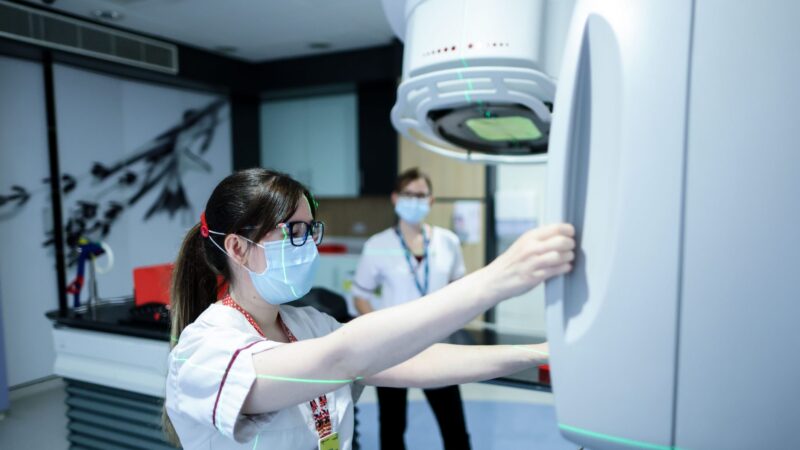
A linear accelerator (LINAC) is the machine that delivers external beam radiotherapy, which is the most common form of radiotherapy.
At The James Cook Cancer Institute, radiotherapy is delivered using advanced Elekta linear accelerators (LINACs).
These machines generate high-energy X-rays which are directed precisely at the treatment area.
Advanced imaging and treatment planning technology help ensure radiation is delivered accurately whilst minimising exposure to surrounding healthy tissues.
Advanced imaging and treatment verification
Before each treatment session, imaging is used to confirm that treatment can be delivered as accurately as possible. This process is known as Image Guided Radiotherapy (IGRT).
Our newest treatment machines include high-definition imaging technology, allowing the radiotherapy team to visualise the treatment area immediately before treatment.
This helps ensure treatment is delivered exactly where it is needed, even when small day-to-day changes in position occur.
Adaptive radiotherapy
For some patients, treatment can be adapted throughout their course of radiotherapy to account for changes in anatomy that may occur during treatment.
Adaptive radiotherapy allows the treatment team to review imaging information and, where appropriate, modify treatment plans to maintain accuracy and ensure the best possible treatment delivery.
This personalised approach helps ensure radiotherapy remains tailored to each patient’s individual needs.
Surface Guided Radiotherapy (SGRT)
Some patients may receive treatment using Surface Guided Radiotherapy (SGRT).
This technology uses specialised cameras to monitor body position throughout treatment without delivering any additional radiation dose.
SGRT can improve treatment accuracy and is particularly useful for treatments where precise positioning is essential.
Why is the LINAC important?
The LINAC is vital for delivering safe and accurate radiotherapy.
Because of its advanced technology, it can treat tumours located deep inside the body, as well as cancers in more sensitive areas, like the head, neck, or lungs.
It allows your doctors to deliver high doses of radiation with great precision, increasing the chances of effectively treating the cancer while reducing the risk of side effects.
After treatment
After your radiotherapy sessions, you won’t be radioactive, so it’s safe to be around others, including children and pregnant women.
Some side effects, such as skin irritation or fatigue, may occur, but these will be monitored and managed by your healthcare team.
In summary
Radiotherapy, delivered through a linear accelerator (LINAC), is an essential part of many cancer treatment plans.
Modern radiotherapy combines advanced treatment machines, high-definition imaging, sophisticated treatment planning and highly skilled staff to deliver safe, accurate and personalised cancer treatment.
These technologies help target cancer cells precisely whilst protecting surrounding healthy tissues wherever possible.