

Overview
University Hospitals Tees (UHT) has created Anatostat, an innovative clinically-led service which produces a 3D model of a patients joint to assist surgeons with planning, training, and education.
Anatostat helps shift the culture towards advanced surgical planning which aligns with NHS priorities for quality, safety, and sustainability.
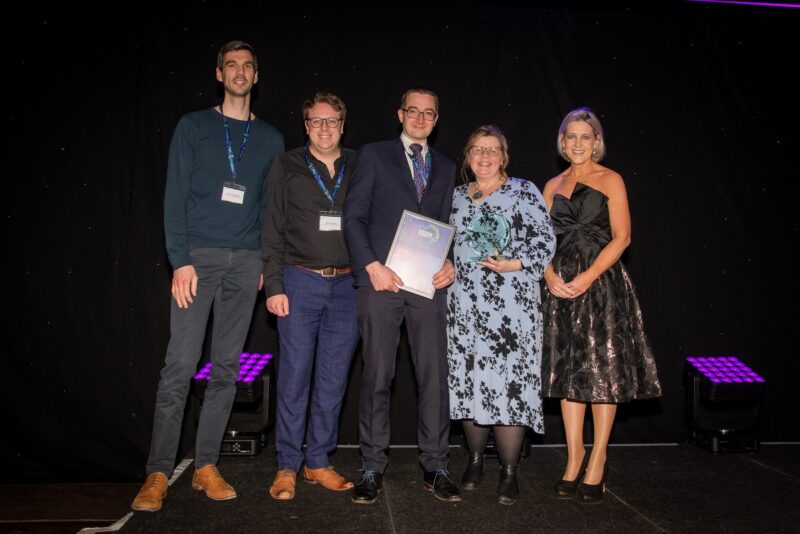
Anatostat won the Patient Safety and Quality Improvement Award at the HI NENC Bright Ideas in Health Awards in 2022.
Models are used by UHT orthopaedics service as a standard of care in complex cases, and have been provided to several NHS orthopaedic departments across England.
Independent health economic analysis of these surgical cases has demonstrated positive impact in clinical outcomes, efficiency gains, and financial effectiveness through reduction in the number of expensive bespoke implants and revision surgeries performed.
As of 2026, Anatostat has printed over 100 bespoke anatomic models. As well as offering this service within the UK and internationally, they are scoping potential applications for forensic evidence and as a test bed for the next generation of 3D printing materials, printers, and digital technology.
The challenge
Complex orthopaedic reconstructive surgery and revision joint replacement procedures demand considerable planning before the day of surgery.
The more that can be understood beforehand, the greater the success. Surgeons often spend the greatest time trying to piece together abnormal anatomy and decide on the most appropriate implants.
When this is on a computer screen, it is difficult to be sure that an implant will fit or work. Furthermore, the effects of cutting bones at different angles can be difficult to judge in multiplanar deformities.
When there is uncertainty in a plan, more options are required at the time of surgery and more “on-table” live decision making.
This adds considerable time and resource costs to procedures. When procedures are complex, it can be difficult to explain the challenges to patients and their families.
The innovation
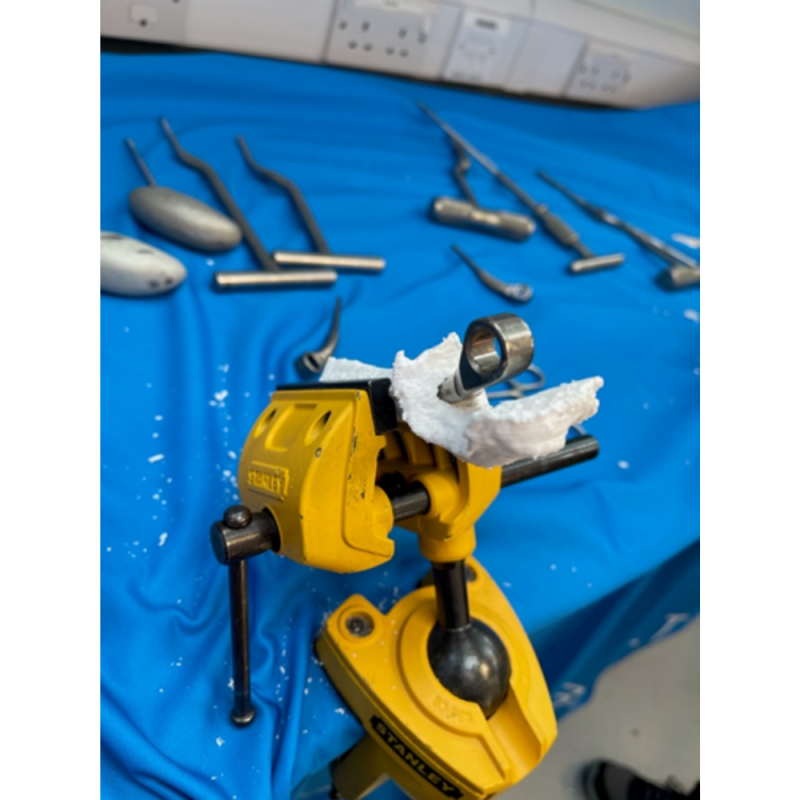
Anatostat is a clinical-led service transforming surgical planning and implant selection. It is a UK trademarked innovation, fully developed, owned, and operated by UHT.
It converts 2D scans into precise 3D anatomical models (to MHRA class I medical device standard) for training, surgical planning, and patient education.
Using CT imaging, calibrated 1:1 models replicate bone or joint deformities and enable pre-surgery rehearsals
Action
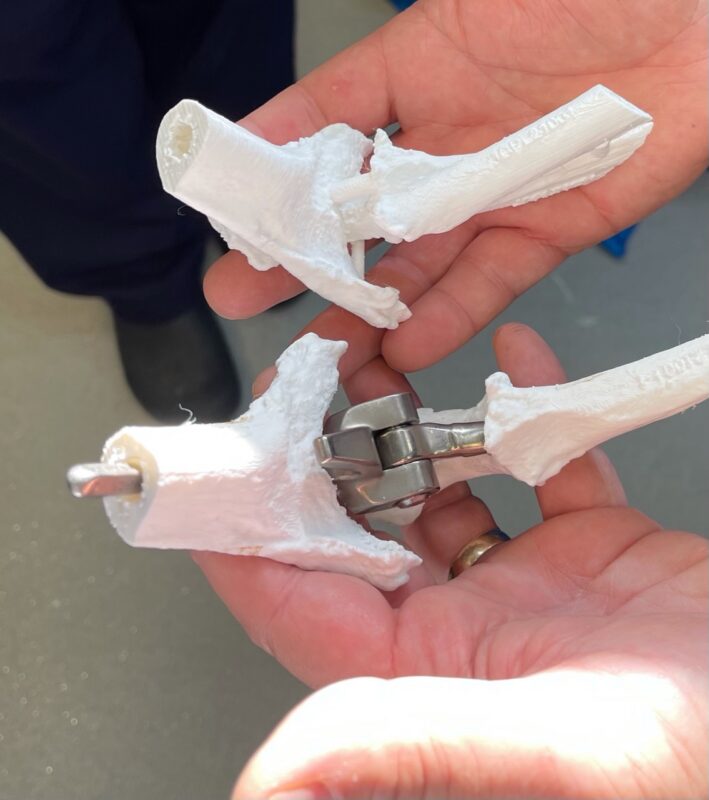
The Anatostat service has been used to print over 100 anatomic models ranging from ankles, feet, knees, elbows, hands, femurs, rib cages, pelvises and even a whole spine.
Models are used within the orthopaedics service at UHT as a standard of care in complex cases, and been provided to several orthopaedic departments across the NHS in England. All models pass quality control checks and conform to UK regulations to meet the standards of a Class 1 medical device.
Anatostat has demonstrated that enabling clinicians to choose the right implant for the right patient, improves decision-making and reduces intra-operative uncertainty.
This proactive approach optimises theatre usage, shortens operating times, and minimises delays caused by last-minute implant changes.
Outcome
Anatostat commissioned an independent health economics analysis by York Health Economics Consortium (YHEC) in 2025, jointly funded by UHT and HI NENC.
YHEC worked with UHT to identify datasets and received an anonymised copy for analysis. They used a cost comparison approach to understand the costs and benefits of using 3D printed models to plan surgery.
Anatostat continues to strengthen this cost model with new data from each surgical case using the service. Outcome data is routinely requested from each service user through digital questionnaire, email, and clinical peer conversations.
The areas of impact were:
Clinical outcomes: Reduced complications and revision rates, with 97% of surgeons confirming models meet requirements and 97% rating them highly realistic.
Efficiency gains: An estimated average time saving of 1 to 2 hours per surgery. This data was supplied by clients for the type of procedure that they were performing. To allow for appropriate sample size, it does not differentiate between types of surgery or complexity. It was outside the scope of this analysis to look at additional examples of efficiency gains, but Anatostat recognises there are multifactorial environmental sustainability gains to be explored.
Financial/economic impact: In complex joint replacement surgery, a threshold analysis was shown to save UHT £1700 per case (minimum of 7 cases to achieve cost savings). This was due to a reduction in the number of expensive bespoke implants and revision surgeries performed, which improved theatre capacity without additional expenditure.
The benefit
Having a 3D anatomical model to review in advance reduces theatre time, ensures equipment readiness, and improves surgical accuracy.
Streamlined planning supports better resource allocation and reduces operational strain.
Training and communication: Surgeons rehearse complex techniques and use models as visual guides, improving team understanding.
Qualitative analysis confirms enhanced ability to assess bone loss, anticipate intraoperative issues, and select implants accurately, leading to safer, faster, and more effective care.