

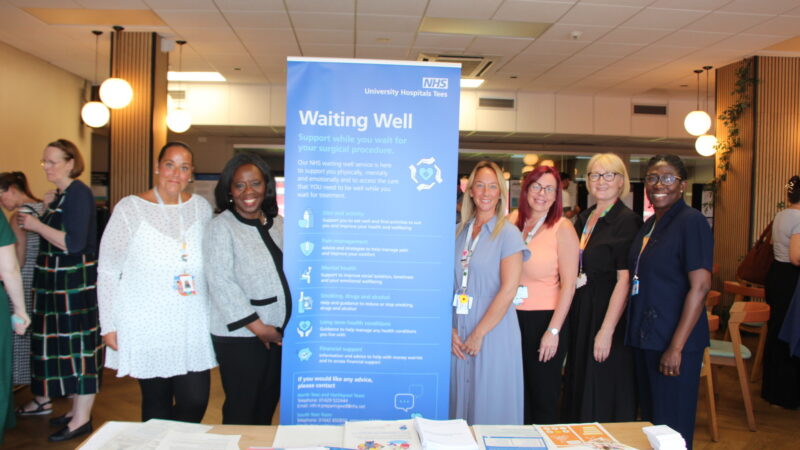
This was the key message from healthcare teams across the Tees Valley as they came together to show their commitment to improving the health of its population and reducing healthcare inequalities people face.
The event, hosted by University Hospitals Tees, brought together NHS organisations, local authority partners, academics and public health experts to explore the challenges facing local communities and find opportunities to work together.
The day included the launch of the organisation’s new population health and healthcare inequalities strategy.
Discussions focused on the significant health challenges affecting communities across the Tees area and the role of health and care organisations in addressing them.
Dr Addei spoke to staff from a range of services including the waiting well team at North Tees and Hartlepool who help people become fitter for their surgery and the prospect programme team at South Tees Hospitals who arrange work placements for people to boost job opportunities.
Committed to supporting our communities
Speaking at the event, Stacey Hunter, chief executive of University Hospitals Tees, said the organisation was committed to supporting its communities in being healthy and being able to access the best quality care when needed through working with local partners.
The conference also showcased examples of successful partnership working already making a difference across the region.
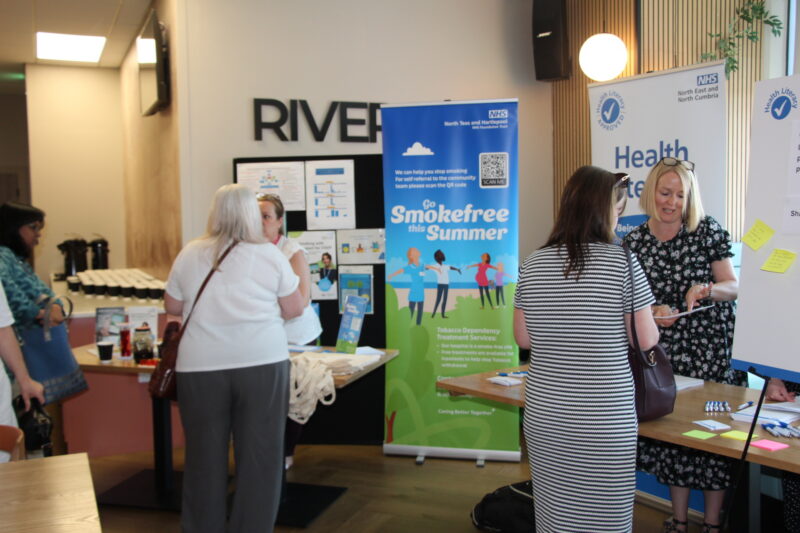
Speakers highlighted collaborative projects involving NHS organisations, local authorities and academic institutions, demonstrating how organisations can work together to improve access to services, reduce inequalities and support better health outcomes.
Professor Esther Mireku, public health consultant at North Tees and Hartlepool, said: “Improving population health and reducing healthcare inequalities is one of the most important challenges facing health and care services today.
“The conference was our chance to bring together experts from across healthcare, share learning and strengthen our commitment to improving outcomes for our local people.
“The launch of our strategy marks an important step forward, but the real success will come from the partnerships and actions that follow.”
Dr Dianne Addei, director of the healthcare inequalities improvement programme at NHS England, said: “It was inspiring to see the level of commitment across Teesside to improving population health and reducing inequalities. The challenges faced by our communities are complex and cannot be solved by any one organisation alone, which is why partnership working is so important.
The initiatives showcased during the visit demonstrated how targeted, person-centred support can improve outcomes, whether that is helping people live healthier lives before surgery, supporting access to employment, or ensuring services reach those who need them most.
“By working together and focusing on the needs of underserved communities, we can make meaningful progress towards achieving fairer health outcomes for everyone.”
During the afternoon, delegates took part in a series of workshops showcasing successful initiatives from across University Hospitals Tees.
This included work focused on lung cancer screening, reducing inequalities in maternity care, improving outpatient access, supporting children and young people from deprived background, health literacy and poverty proofing.