

Introduction
You have been recommended by a health care professional to eat a ‘pureed’ diet/IDDSI level 4.
This booklet aims to help you to understand how to prepare food to a level 4 texture and how to eat well.
More information can be found on the IDDSI website.
Level 4 pureed food
- Is usually eaten with a spoon.
- Does NOT require chewing.
- Has a smooth texture with no lumps.
- Holds its shape on a spoon.
- Falls off a spoon in a single spoonful when tilted.
- Is NOT sticky.
- Liquid (like sauces) must not separate from solids.
How to check that it is Level 4
It is safest to test pureed food using the IDDSI fork drip test and the IDDSI spoon tilt test:
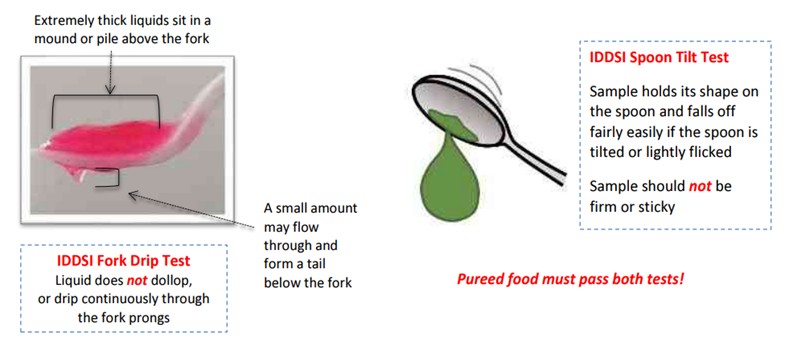
For safety, AVOID the food textures listed below which pose a choking risk for adults who require level 4 pureed food:
| Food types to AVOID | Examples of food to AVOID |
| Mixed thin & thin textures | Soup with pieces of food, cereal with milk |
| Hard or dry food | Nuts, raw vegetables (e.g., carrot, cauliflower, broccoli), dry cakes, bread, dry cereal |
| Tough or fibrous foods | Steak, pineapple |
| Chewy | Lollies/sweets, cheese chunks, marshmallows, chewing gum, sticky mashed potato, dried fruits, sticky foods |
| Crispy | Crackling, crisp bacon, cornflakes |
| Crunchy food | Raw carrot, raw apple, popcorn |
| Sharp or spiky | Crisps |
| Crumbly bits | Dry cake crumble, dry biscuits |
| Pips, seeds | Apple seeds, pumpkin seeds, white of an orange (pith) |
| Food with skins or outer shell | Peas, grapes, chicken skin, salmon skin, sausage skin |
| Foods with husks | Corn, shredded wheat, bran |
| Bone or gristle | Chicken bones, fish bones, other bones, meat and gristle |
| Round, long shaped food | Sausage, grape |
| Sticky or gummy food | Nut butter; overcooked oatmeal/porridge, edible gelatin, konjac containing jelly, sticky rice cakes |
| Stringy food | Beans, rhubarb |
| Floppy foods | Lettuce, cucumber, spinach leaves |
| Crust formed during cooking or heating | Crust or skin that forms on food during cooking or after heating, for example cheese topping, mashed potato, custard |
| Juicy food | Where juice separates from the food piece in the mouth, for example watermelon, cucumber |
| Visible lumps | Lumps in pureed food or yoghurt |
A balanced diet
It is important to eat a variety of foods as our bodies need a range of nutrients every day.
Protein
Help build muscle and repair tissue. These include: meat, fish, poultry, eggs, nuts, beans, lentils, tofu and Quorn. Try to eat 3 portions daily.
Carbohydrates
This is the body’s main source of energy and include: pureed potatoes, pasta, polenta, plantain, rice, some cereals and porridge. Try to eat some of these foods with every meal.
Dairy / dairy alternatives
These foods provide protein and calcium. Try to have 2 to 3 portions everyday of full-fat milk, cheese, yoghurt, fromage frais. Non-organic soya options are the highest protein non-dairy alternatives. Use the fortified milk recipe to make drinks and puddings.
Fruit and vegetables
Try to have 5 portions of a variety of fruit and vegetables daily to provide essential vitamins, minerals and fibre.
Foods to prepare and avoid
Foods
Meals – all must include a source of protein such as meat, fish, eggs, pulses, cheese or vegetarian alternatives.
*Note: Ensure all bones are removed from fish. Some short crust pastry can sometimes be blended to smooth with gravy.
Puree to Level 4 using nourishing liquids or sauces
- Tender meat, fish, Quorn or tofu stew, casserole or curry served with potatoes.
- Lentils – cooked in sauce/gravy/stock for example, dal or lentil casserole.
- Root vegetable curry with silken tofu – soft breadcrumbs can be added before pureeing.
- Mince and potatoes or corned beef hash.
- Shepherd’s, cottage or fish pie with soft mashed potato topping.
- Black pudding (skin removed) and baked beans.
- Fish in sauce.
- Tuna mayonnaise with mashed potato.
- Eggs – scrambled, baked, hard boiled or poached with sauce or mayonnaise.
Avoid
- Tough meat, fat and gristle.
- Cold or processed meat such as chopped pork, luncheon meat, sausages with skin, burger, haggis.
- Meat, fish and poultry with bones for example chicken thighs, sardines.
- Fried/breaded/battered products for example. fish cakes, breaded turkey escallops, scotch eggs.
- Pastry – any pies, pastries, pasties or sausage rolls.
- Pizza.
- Fried egg.
Foods
Starchy Carbohydrates include with every meal.
Puree to Level 4 using nourishing liquids or sauces
- Porridge made with milk – may need to sieve/blend to remove husks.
- Ready Brek or instant porridge without ‘bits’ made with milk.
- Weetabix soaked in plenty of warm milk with any excess drained off.
- Well-cooked pasta or polenta blended with sauce.
- Pureed potatoes, plantain and sweet potatoes without skins.
- Well-cooked risotto or pudding rice blended.
Avoid
- Porridge with ‘bits’ such as Apple Ready Brek or multigrain varieties.
- Crispy, coarse and/or mixed textured cereals such as All-Bran, Shredded wheat, muesli, bran flakes, cornflakes or Rice Krispies.
- All bread and toast.
- Pancakes, bagels, pizza and other baked goods. Pasta with hard or crispy topping or crusts such as baked/toasted breadcrumbs, crispy cheese or hard baked pasta edges.
- Potato skins.
- Other types of rice such as long grain, basmati rice.
Foods
Soup Note: If you require thickened fluids, thicken to your advised drink level.
Puree to Level 4 using nourishing liquids or sauces
- Smooth soups containing meat, fish, lentils, split peas, silken tofu.
- For extra nourishment add fortified milk, grated cheese or soft breadcrumbs.
Avoid
- Mixed texture or lumpy varieties such as scotch broth or chicken and rice (these need to be blended to smooth consistency).
Foods
Vegetables
Puree to Level 4 using nourishing liquids or sauces
- Tomatoes – tinned and sieved or fresh, skinned and deseeded (thickening may help separation of liquid and solid).
- Well-cooked soft vegetables with no stalks, for example cauliflower and broccoli tops, carrot, turnip, parsnip, butternut squash, courgette, avocado.
- Baked beans and mushy peas – may need to be sieved.
Avoid
- Raw or firm-cooked vegetables.
- Salads and salad vegetables – lettuce, cucumber, raw carrot, onions, peppers, celery, coleslaw.
- Mushrooms, peppers, courgettes.
- Peas, sweetcorn, runner beans.
- Kidney, borlotti, broad and black-eyed beans.
Foods
Fruit
Puree to Level 4 using nourishing liquids or sauces
- Soft fresh fruit such as banana.
- Kiwi fruit, strawberries or raspberries, sieved to remove seeds.
- Melon – drain excess fluid and thicken if required.
- Stewed apples or pears with skins removed.
- Soft tinned fruit – pears, peaches, nectarines, mandarins.
- Fruit puree.
- Fruit snack tubes or pouches such as GoGo Squeez, Heinz Fruit Pouches or shop’s own brand may be suitable.
- Fruit smoothie – may need to be sieved.
Avoid
- Hard and/or mixed texture fresh fruit such as pineapple, apple, orange and other citrus fruits.
- Dried fruit.
Foods
Dairy and alternatives
Puree to Level 4 using nourishing liquids or sauces
- Cream and soft cheese with no rind, for example mascarpone, ricotta, soft goat’s cheese, full-fat Philadelphia.
- Natural yoghurt and fromage frais can be added to savoury dishes.
- Silken tofu can be used in sauces, soups and desserts as substitute for cream – blend it well to ensure it is smooth and fully incorporated.
Avoid
- Solid pieces of cheese.
- Cheese with rind such as Brie or Camembert.
- Stringy cheese such as mozzarella or Gruyere.
- Chewy cheese such as halloumi or paneer.
Foods
Desserts and sweet snacks
Puree to Level 4 using nourishing liquids or sauces
- Smooth yoghurt, fromage frais.
- Thick custard/semolina thinned with fortified milk.
- Rice pudding with seedless jam.
- Mousse or instant whips.
- Smooth syrup style sauces such as chocolate or fruit flavour.
- Smooth chocolate puddings such as Cadbury Pots of Joy, Rolo, Milkybar.
- Pannacotta, ensure any topping/sauce is also the correct texture and has no seeds in it.
- Fruit smoothie – may need to be sieved.
Avoid
- Yoghurt with ‘bits’ for example, fruit, nuts, toffee, chocolate.
- Cheesecake.
- Pies and sweet pastries.
- Crumbles.
- Meringue.
- Biscuits, cookies, doughnuts.
- Sweets – mints, boiled, chocolate.
Foods
Savoury snacks
Puree to Level 4 using nourishing liquids or sauces
- Avocado or hummus pureed with yoghurt, mayonnaise or cream cheese.
- Fortified smooth soups.
- Smooth nut butter mixed with cream or milk.
- Soft cream cheese, smooth pâté, hummus and meat/fish/bean paste eaten on their own.
Avoid
Crisps, nuts, pretzels, Bombay mix, crackers, flatbread.
Sample meal plans
Puree foods with nourishing liquids or sauces to level 4. You may need to add additional sauce, gravy or other nourishing liquids to achieve the required consistency. Do not add water.
Day 1
Breakfast
Pureed fruit.
Porridge made with milk, pureed and sieved.
Hard-boiled egg, pureed with mayonnaise.
Mid-morning
*See snack ideas
Lunch
Pureed tuna mayonnaise and mashed potato.
Pureed banana and custard.
Mid-afternoon
*See snack ideas
Evening meal
Pureed shepherd’s pie with broccoli tops.
Rice pudding and seedless jam.
Bedtime
Thickened hot milky drink for example, hot chocolate, Horlicks, Ovaltine etc.
Day 2
Breakfast
Fruit juice.
Weetabix pureed with milk.
Smoked fish mousse.
Mid-morning
*See snack ideas
Lunch
Lentil soup pureed with soft breadcrumbs and grated cheddar cheese until a smooth, consistent texture.
Pureed fruit and smooth yoghurt.
Mid-afternoon
*See snack ideas.
Evening meal
Pureed chicken casserole with potatoes and carrots.
Plain sponge and thick custard.
Bedtime
Thickened fruit smoothie.
Needing Extra Nourishment?
If your appetite is poor or you have lost weight, you may need extra nourishment.
- Aim to have 3 small meals and 2 to 3 snacks each day.
- Try to have something to eat every 2 to 3 hours during waking hours.
- Avoid diet or slimming foods such as reduced-fat, low-fat, sugar-free or low-calorie varieties.
- Fortify foods – Use the table below to add nourishment to your meals and snacks and use the fortified milk recipe below to make fortified milk for drinks, sauces and other foods that call for milk.
Fortified milk:
- 4 tbsp skimmed milk or soya protein powder.
- 1 pint of full-fat milk or non-organic soya milk.
Mix the powder with a small amount of milk first to make into a paste. Then add the rest of the milk to make it up to 1 full pint. Aim to use a pint of fortified milk daily.
Food
Cereals. Always drain off excess fluid after soaking.
Ideas to add extra nourishment
Fortified milk, smooth full-fat yoghurt and pureed fruit.
Food
Sauces
Ideas to add extra nourishment
*Grated cheese, cream cheese, silken tofu, milk powder, smooth full-fat yoghurt, evaporated milk.
Food
Mashed potato
Ideas to add extra nourishment
*Grated cheese, milk powder or pastes, beaten egg.
Food
Vegetables
Ideas to add extra nourishment
Smooth nut/seed butters or pastes, *grated cheese, smooth full-fat yoghurt, sauce.
Food
Soups Thicken to your advised drink level.
Ideas to add extra nourishment
*Grated cheese, evaporated milk, fortified milk, skimmed milk powder, pea/soya protein powder, silken tofu, soft breadcrumbs, red split lentils, yellow split peas (you may need to liquidise and sieve the ideas in bold).
Food
Puddings
Ideas to add extra nourishment
Smooth full-fat yoghurt, evaporated milk, custard.
Use fortified milk to make milk puddings.
Avoid reduced sugar/fat or ‘diet’ desserts.
Always make sure any additions are fully incorporated into your meal or snack.
*Do not use stringy or chewy cheese, or cheese with rind. Only use melted hard cheese like cheddar, parmesan, pecorino or red Leicester.
Equipment to Prepare Level 4 Pureed food
Depending on the food used, different equipment is helpful to achieve level 4 pureed food.
Blender/food processor
Best for blending foods containing different textures such as stews and casseroles. Ingredients can easily be added to fortify foods during blending e.g. fortified milk, milk/protein powder, grated cheese, nut or seed butter/paste or soft breadcrumbs to create a smooth, uniform texture.
- Ensure the blades are covered with food.
- Never overfill the container.
- Do not use boiling liquids.
- Take care if food is hot.
- Hold the lid firmly (use a cloth to do this if the food is hot).
- Blend main course and vegetables separately.
Sieve
Can be used to hold back ‘bits’, such as husks from porridge or seeds from pureed fruit.
Small balloon (wire) whisk
Useful for adding in dry powders like milk powder, cornflour or prescribed thickeners. Evaporated milk and yoghurt can easily be whisked into purees and sauces.
Ensure that all equipment is cleaned thoroughly after use as food can become trapped and hard to clean once dried on.
Some foods may need to be re-heated after altering the texture.
Re-heating can be done easily in the microwave or in a bowl over a pan of simmering water. This should only be done once, and any remaining food thrown away.
How to make foods more appetising
- Do not blend the meal altogether, as it will be difficult to identify different foods or flavours, and it does not look appealing.
- Make use of the natural colour of food to ensure variety, for example blended fish and sauce, blended carrot, blended chocolate dessert.
- Add extra flavour to food with spices, smooth pesto and/or decorate with sauces such as tomato ketchup or smooth fruit syrup.
Helpful tips
- Freeze extra portions of meals. Allow to thaw completely before re-heating. Re-heat until piping hot and allow to cool to individual preference. Look out for any change in texture on reheating for example if crusts occur or water separates.
- If you require some convenient options food companies such as Wiltshire Farm Foods and Oakhouse Foods provide Level 4 ready meal options.
- Constipation can be a problem if you are lacking fibre in your diet. Good sources of fibre include cereals such as porridge or Weetabix, fruits and vegetables and pulses. Fluid is essential to help prevent constipation, aim to have at least 6 to 8 drinks a day.
Please note: This leaflet should be used in conjunction with advice from a dietitian.
Contact numbers
If you need further advice, or have any problems, please contact the appropriate number below:
The James Cook University Hospital
Nutrition and Dietetics Department
Marton Road
Middlesbrough
Cleveland
TS4 3BW
Telephone: 01642 854777
Monday to Friday, 8am to 4.30 pm
Email: [email protected]
Community Dietetics
Langbaurgh House
Bow Street
Guisborough
Cleveland
TS12 7AA
Telephone: 01642 944455
Email: [email protected]
Friarage Hospital
Nutrition and Dietetics Dept
Bullamoor Road
Northallerton
North Yorkshire DL6 1JG
Telephone: 01609 762012
Email: [email protected]
Patient Experience
South Tees Hospitals NHS Foundation Trust would like your feedback. If you would like to share your experience about your care and treatment or on behalf of a patient, please contact The Patient Experience Team who will help you to do this.
This service is based at James Cook University Hospital but also the Friarage Hospital in Northallerton, our community hospitals and community health services.
South Tees Hospitals NHS Foundation Trust
Telephone: 01642 854807 / Freephone: 0800 0282451
Email: [email protected]
Monday to Friday, 9:00 am to 4:00 pm
Out of hours if you wish to speak to a senior member of Trust staff, please contact the hospital switchboard (numbers below).
James Cook University Hospital
Marton Road
Middlesbrough
TS4 3BW
Telephone: 01642 850850
The Friarage Hospital
Northallerton
North Yorkshire
DL6 1JG
Telephone: 01609 779911
Leaflet ID: PI014 version 1
Review Due: 16 February 2029